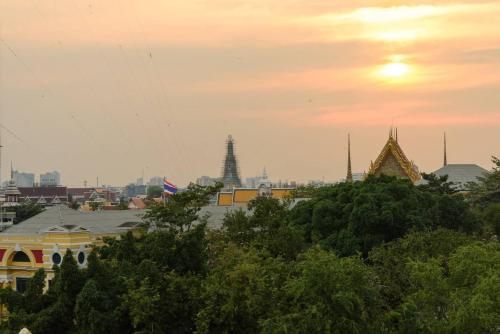
The Grand Palace is the official residence of the kings of Siam since 1782, a walled city of throne halls, pavilions, gardens, a mint, an armoury and a royal chapel spread over 218,000 square metres between the Chao Phraya river and Sanam Luang. Rama I began it in 1782 when he moved the capital across the river from Thonburi, and every subsequent king added to it. It served as the everyday residence of Thai monarchs until 1925; today it is used only for ceremony, royal funerals and state banquets, but it remains the spiritual and constitutional address of the country. A visit takes you first through Wat Phra Kaew, then into the outer palace where the Chakri Maha Prasat, a half-European, half-Thai throne hall of 1882, stands. Behind it is the Dusit Maha Prasat, a purely Thai-style hall used for the lying-in-state of kings. The Queen Sirikit Museum of Textiles, in the outer courtyard, is included with the ticket. The Inner Court is closed. Allow at least two and a half hours, and arrive at 8:30 sharp to see the Emerald Buddha before the tour buses fill it. Dress rules are strict: long trousers, covered shoulders, no leggings, no torn jeans.